
Malik Feroz Khan Noon
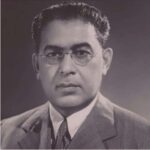
Sir Malik Feroz Khan Noon, or Feroze Khan Noon as he was better known, was an important figure in the early years of Pakistan. A barrister by training and a politician by choice, Nunn’s career spanned continents and witnessed critical junctures in both British India and the newly carved out nation of Pakistan. This article sheds light on the life and legacy of this complex leader.
Early Life and Education (1893-1919):
Born on May 7, 1893, in Nurpur Noon, Sargodha District, Feroz Khan hailed from an influential Punjabi family. He received his early education at Aitchison College, Lahore, a prestigious institution that groomed many future leaders of the subcontinent. Following the footsteps of many young men of his generation, Noon traveled to England for higher studies. He obtained his law degree from the Middle Temple in London, qualifying him as a barrister.
From British India to Pakistan (1919-1947):
Upon returning to India, Noon began his legal career. However, his talents and connections soon drew him into the political sphere. He joined the All-India Muslim League, a party advocating for the rights and political aspirations of Muslims in British India. This period also saw Noon’s rise in the bureaucracy. He served as the Revenue Minister of the princely state of Bahawalpur and later held various important positions in the British Indian government.
A defining moment in Noon’s career came during World War II. Stationed in London as the High Commissioner of India, he played a crucial role in coordinating Indian resources for the British war effort. He even acted as an advisor to Prime Minister Winston Churchill on matters related to the British Indian Army. This wartime experience exposed Noon to international politics and diplomacy, skills that would prove invaluable in his future endeavors.
Governor of East Bengal and Beyond (1947-1956):
With the partition of India in 1947 and the creation of Pakistan, Noon returned to his newly formed homeland. He was appointed Governor of East Bengal, the eastern wing of the newly independent nation (present-day Bangladesh). This role thrust him into the heart of a complex political and social landscape. East Bengal, with its distinct culture and language, grappled with issues of integration and representation within Pakistan. Noon’s tenure as Governor was marked by attempts to bridge these divides and promote economic development in the region.
Following his stint in East Bengal, Noon ascended the ranks of national politics. He served as Foreign Minister (1956-1958) and played a key role in forging alliances with other Muslim nations. His diplomatic acumen helped strengthen Pakistan’s position in the international arena during its nascent years.
Prime Minister and the Tumultuous Years (1957-1958):
In December 1957, Feroz Khan Noon assumed the highest office in Pakistan, becoming the nation’s seventh Prime Minister. He inherited a country grappling with numerous challenges, including political instability, economic woes, and social unrest. Noon’s premiership was marked by attempts to stabilize the economy and address internal divisions within the country. However, his efforts were often hampered by a volatile political climate and disagreements within his own party.
The most significant event of Noon’s short-lived premiership was the imposition of martial law in 1958 by President Iskandar Mirza. This controversial move, fueled by political turmoil and allegations of corruption, ultimately led to Noon’s dismissal as Prime Minister. He was further ousted in the subsequent military coup led by General Ayub Khan, marking the end of Pakistan’s first decade of civilian rule.
Later Life and Legacy (1958-1970):
Following his removal from power, Noon retreated from active politics. He spent his remaining years writing and reflecting on his experiences. He passed away in his hometown of Nurpur Noon in 1970.
Feroz Khan Noon’s legacy remains a subject of debate. While some hail him as a competent administrator and a skilled diplomat, others criticize his inability to navigate the turbulent political landscape of his time. However, there is no denying his contribution to Pakistan’s early years. He served the nation in various capacities and witnessed critical moments in its history.
Key Points to Remember:
- Feroz Khan Noon was a prominent Pakistani politician who served as the nation’s seventh Prime Minister.
- He played a multifaceted role in both British India and Pakistan, holding positions like Governor, Foreign Minister, and Prime Minister.
- Noon’s career highlights the complexities of Pakistan’s early years, marked by political instability, economic challenges, and social divisions.
*Despite his short tenure as Prime Minister, Noon has played a significant role in Pakistan’s development and foreign affairs.