
Nawab Sir Malik Umar Hayat Khan Tiwana
A Soldier-Statesman of British India
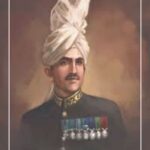
Major General Nawab Sir Malik Umar Hayat Khan Towana (1874-1944) was a multifaceted personality who understood the complexities of British India. A distinguished soldier, a wealthy landowner, and a prominent politician, his life offers a fascinating glimpse into the dynamics of power and identity in an era of immense change.
A Soldier’s Legacy
Born into a prominent Rajput Muslim family in Punjab, Tiwana’s destiny seemed intertwined with the military. His father, Khan Bahadur Malik Sahib Khan, held the hereditary title of Provincial Darbari, highlighting the family’s longstanding association with the British Raj. Following in his footsteps, Tiwana received his military training at the Imperial Cadet Corps in Dehradun.
Tiwana’s military career began during a period of imperial expansion. He saw action in the Somaliland campaign (1902-04) and the British invasion of Tibet (1903-04). His true test came during the First World War. Attached to the prestigious 18th King George’s Own Lancers, he served on the Western Front, earning six Mentions in Despatches, a testament to his bravery and leadership. This wartime service culminated in his promotion to the rank of Major General in 1917.
Beyond the Battlefield: Land and Politics
Tiwana’s influence extended beyond the battlefield. As one of the largest landowners in the Punjab, he wielded considerable power and influence. His vast estates reflected the region’s traditional landed aristocracy, strengthened by the hereditary title of Nawab. Tiwana served as attache to the Amir of Afghanistan in 1907, using his diplomatic acumen and British officials. showed confidence in him by.
Navigating a Changing Landscape
Tiwana’s political journey mirrored the evolving political landscape of British India. In 1910, he entered the Governor-General’s Imperial Council, a precursor to the national legislature. This marked the beginning of a long association with Indian politics. Initially, Tiwana advocated for a more prominent role for Europeans in the administration, reflecting the dominant colonial perspective of the time.
However, with the rise of the Indian independence movement, Tiwana’s views began to shift. He became a prominent member of the Unionist Party, a predominantly Muslim political party advocating for cooperation with the British Raj. This stance placed him at odds with the increasingly vocal Muslim League, which championed the separate creation of Pakistan.
A Controversial Legacy
Tiwana’s opposition to partition created friction with the Muslim League. In 1942, he became the Prime Minister of Punjab, a crucial province in the looming partition debate. He vehemently opposed the division of Punjab, fearing the bloodshed it would unleash. However, his efforts were ultimately futile. The Muslim League, through a series of civil disobedience campaigns, destabilized his government, paving the way for partition.
Tiwana’s legacy remains contested. While some view him as a loyal administrator who championed a united India, others see him as a collaborator who failed to understand the aspirations of the Muslim population. The violence that engulfed Punjab during partition undoubtedly tainted his legacy.
A Life at the Crossroads of Empire
Nawab Sir Malik Umar Hayat Khan Tiwana was a product of his times. He navigated the complexities of a colonial world, reconciling his loyalty to the British Raj with his identity as a prominent Punjabi leader. His life story offers valuable insights into the social, political, and military dynamics of British India, particularly during the crucial pre-independence era. As the Indian subcontinent hurtled towards independence, Tiwana’s experiences highlight the challenges faced by those caught between the tides of change.
Further Exploration
To delve deeper into the life of Nawab Sir Malik Umar Hayat Khan Tiwana, consider exploring the following resources:
- His Wikipedia page provides a concise overview of his life and achievements https://en.wikipedia.org/wiki/Malik_Umar_Hayat_Khan.
- The National Portrait Gallery in the UK holds portraits of Tiwana, offering a visual representation of this historical figure https://www.npg.org.uk/collections/search/portrait/mw114549/Sir-Nawab-Malik-Umar-Hayat-Khan-Tiwana.
- The University of Southampton’s archives contain papers belonging to his son, Sir Khizar Hayat Tiwana, who also played a significant role in Punjabi politics https://eprints.soton.ac.uk/449032/1/Thesis_AnnaEwaLitwic_revised_final_cpr.pdf.