
Sargodha District
Sargodha is not only a powerhouse in producing agricultural crops, but its history, cultural heritage, and natural beauty are also unparalleled.
Overview
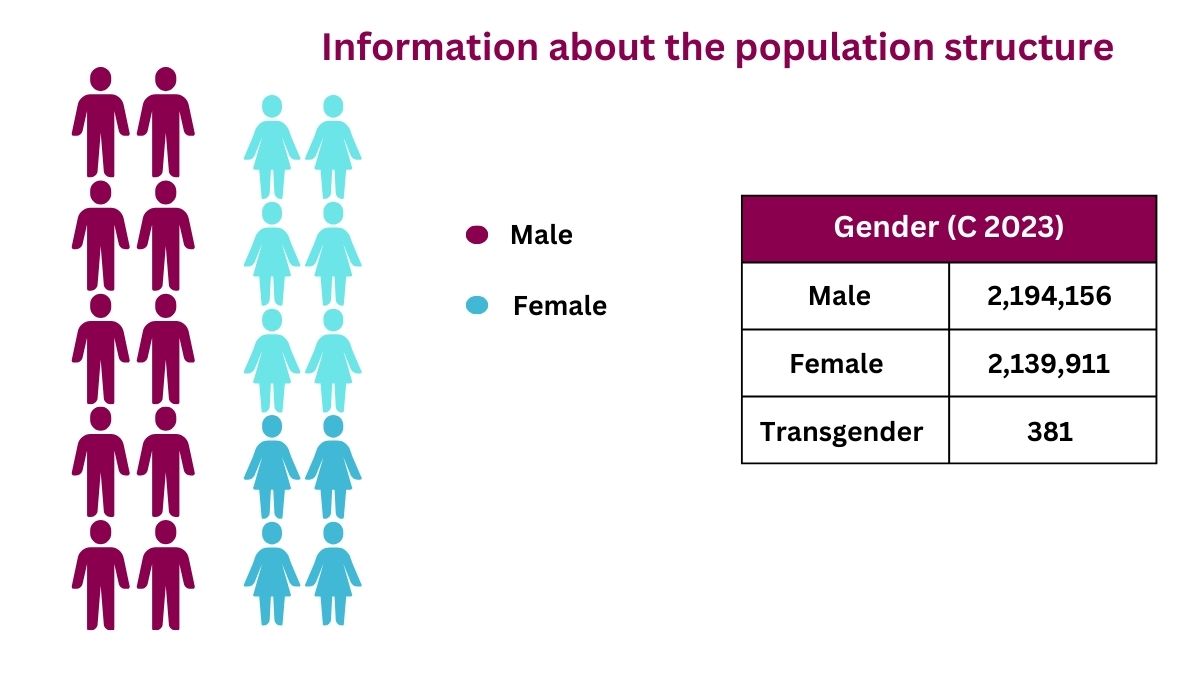
Sargodha District is a center of commerce and agriculture. It covers an area of 5,854 square kilometers. The district has a population of 4,334,448 [2023] Census, a population density of 740.2/km² [2023], and an annual population change of 2.7% [2017 → 2023]. The district has a male population of 50.6% and a female population of 49.40%. The seven tehsils of the district are Sargodha, Kot Momin, Bhalwal, Shahpur, Sillanwali, Sahiwal, and Bhera.
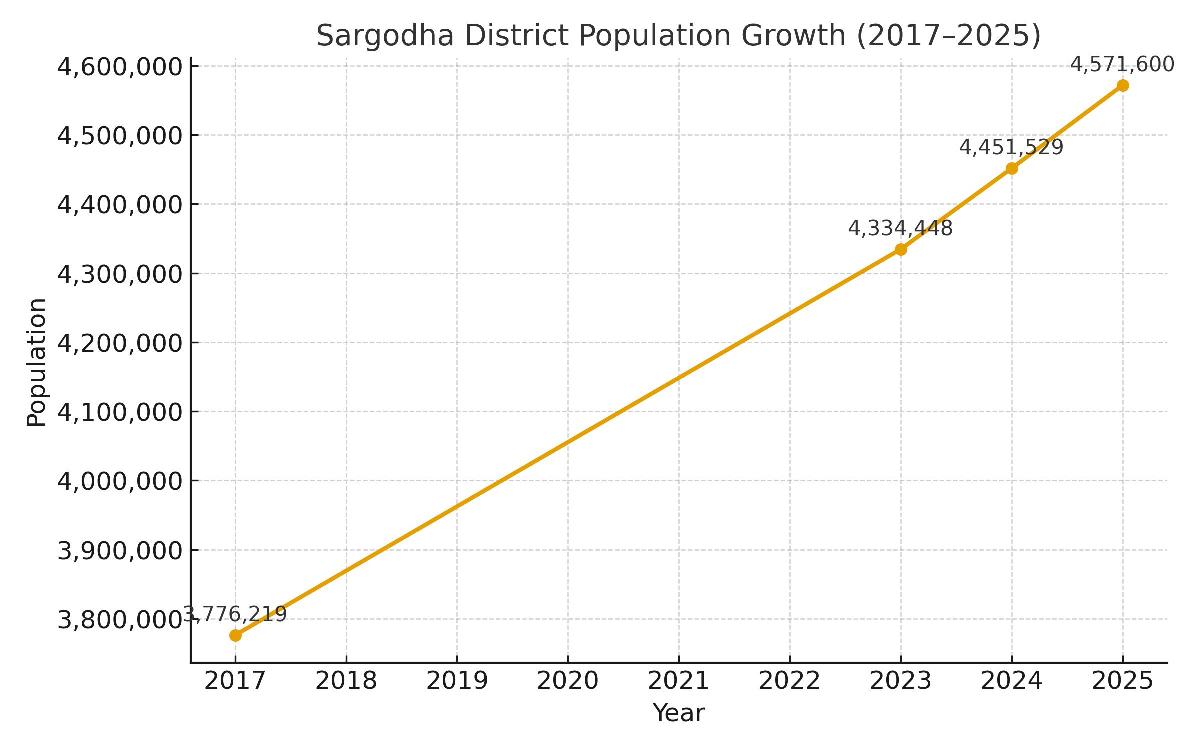
As of the 2023 census, Sargodha District had a population of 4,334,448. While there is no official population census for 2025, estimates can be made based on the latest data. Given an average annual population growth rate of 2.7% observed between the 2017 and 2023 censuses, the projected population for 2025 is approximately 4.57 million.
Population Projection (2023–2025)
|
Year
|
Estimated Population
|
|---|---|
|
2023
|
4,334,448
|
|
2024
|
4,451,529
|
|
2025
|
4,571,600
|
Population details from the 2023 census
Rural Population: 2,724,861 (62.87%)
Urban Population: 1,609,587 (37.13%)
Literacy Rate: 66.73%
Male Literacy: 73.63%
Female Literacy: 59.62%
Geography and Climate
Most of the land in Sargodha is fertile, which is ideal for farming. The district’s excellent canal system is an example to the world, which irrigates the entire district. The region’s climate is summer, winter, spring, and autumn, with occasional rain.
The district’s economy is based on agriculture. Sargodha’s share in Pakistan’s agricultural production is significant. The region’s famous crops include wheat, rice, sugarcane, and the famous Kino mandarin. In recent years, Sargodha has seen an increase in industrial activities, with the textile industry being prominent.
Culture and Heritage
Sargodha district has a rich cultural tapestry. Folk dance and music are part of the local traditions at weddings, various festivals, and harvest festivals. There are numerous historical sites within the district which are disappearing due to government negligence.
Public Services and Infrastructure
Sargodha district has a network of roads and railways that connect it to other cities in the country. These days, construction and beautification of roads inside and outside the city is underway. The construction of a bridge, especially on Mall Road Sargodha, could lead to development in the area. The district administration is also working for the education, clean water, health, and sanitation of the residents, but due to a lack of staff and funds, the services are not being provided fully.
Sargodha has schools, colleges, and campuses of prominent universities catering to the educational needs of the area, including government and private educational institutions. The University of Sargodha attracts students from all over Punjab. The university has numerous departments that make it stand out in Punjab. In addition, medical colleges are also catering to the needs of students in the medical field.
There is a network of government and private hospitals in the district that provide basic and modern medical facilities to the population. The Punjab government is trying to increase facilities in government hospitals, but lack of funds and an annual increase in population are leading to a decrease in facilities. The private sector is well-versed in this issue, due to which a network of private hospitals is being formed across the district. Which are becoming prominent by providing modern facilities to the patients.